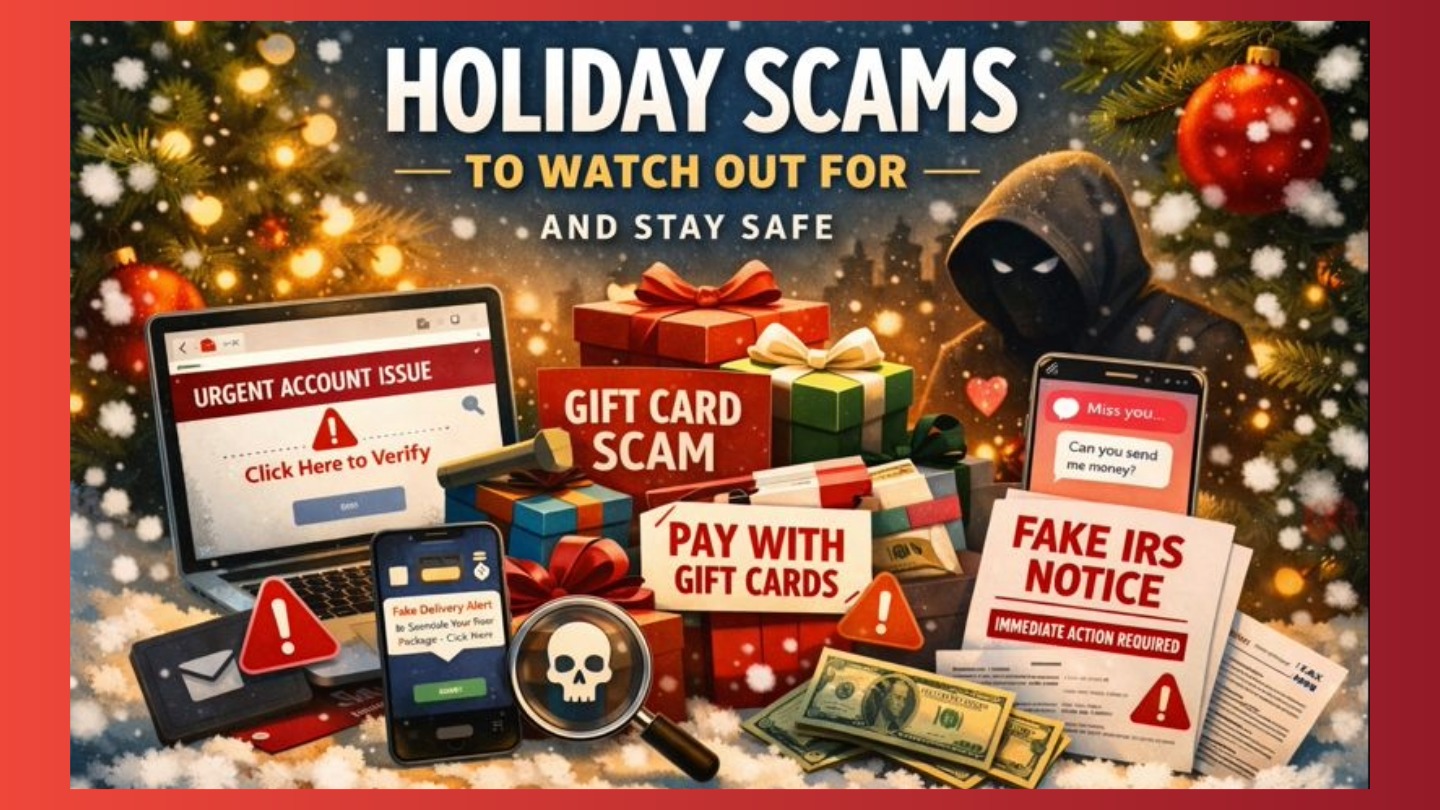
The holiday season and the weeks that follow are prime time for scammers. Increased online shopping, year-end financial activity, travel, and post-holiday returns create the perfect environment for fraud. As we head into the new year, both individuals and businesses need to stay alert.
Below is a practical breakdown of the most common holiday and early-year scams, along with clear steps you can take to protect yourself and your organization.
1. Phishing Emails and Text Messages
How the scam works:
Scammers send emails or texts pretending to be from trusted brands, banks, or service providers. Messages often include fake shipping issues, password reset alerts, or account problems designed to create urgency.
How to protect yourself:
- Never click links or download attachments from unexpected messages.
- Hover over links to inspect URLs before clicking.
- Enable multi-factor authentication (MFA) on all major accounts.
- Businesses should provide regular phishing awareness training and a simple way to report suspicious messages.
Source:
Federal Trade Commission – https://consumer.ftc.gov/articles/how-recognize-and-avoid-phishing-scams
2. Fake Delivery and Shipping Scams
How the scam works:
With packages flying everywhere, scammers pose as delivery companies claiming there’s an issue with a shipment. Victims are asked to click a link or pay a small “redelivery” fee.
How to protect yourself:
- Track packages only through official retailer or carrier websites.
- Avoid clicking delivery links sent via unsolicited texts or emails.
- Businesses should warn customers that they will never request payment via text.
Source:
United States Postal Service – https://www.uspis.gov/news/scam-article/smishing-package-tracking-text-scams
3. Gift Card Scams
How the scam works:
Scammers impersonate employers, family members, or government agencies and demand payment via gift cards. This scam spikes during holidays and again in January for “overdue” payments.
How to protect yourself:
- No legitimate business or government agency accepts gift cards as payment.
- Verify requests using a second communication method.
- Train employees to treat gift card requests as a red flag.
Source:
Federal Trade Commission – https://consumer.ftc.gov/articles/gift-card-scams
4. Fake Charity Scams
How the scam works:
Fraudsters exploit goodwill by creating fake charities or impersonating real ones, especially after disasters or during year-end giving campaigns.
How to protect yourself:
- Research charities before donating.
- Avoid pressure tactics demanding immediate donations.
- Businesses should vet charitable campaigns before promoting them internally.
Source:
https://consumer.ftc.gov/articles/charity-scams
5. Holiday Job and Gig Scams
How the scam works:
Fake job postings promise easy money, flexible hours, or holiday bonuses. Victims may be asked to pay upfront fees or provide sensitive personal information.
How to protect yourself:
- Be skeptical of jobs that require payment to get hired.
- Research employers thoroughly and verify job listings on official websites.
- Businesses should warn contractors and freelancers about common employment scams.
Source:
https://consumer.ftc.gov/articles/job-scams
6. Romance and Social Media Scams
How the scam works:
Scammers build emotional connections through social media or dating platforms, often escalating around holidays when people feel more isolated. Requests for money usually follow.
How to protect yourself:
- Avoid sharing financial or personal details online.
- Be cautious of relationships that move quickly or avoid in-person meetings.
- Educate family members and employees on emotional manipulation tactics.
Source:
https://consumer.ftc.gov/articles/romance-scams
7. Tax and Refund Scams (Early New Year Spike)
How the scam works:
As tax season approaches, scammers impersonate tax authorities, claiming refunds, verification issues, or penalties.
How to protect yourself:
- Tax agencies do not initiate contact via email or text.
- File taxes early to reduce identity theft risks.
- Businesses should secure payroll and tax documents and limit access internally.
Source:
Internal Revenue Service – https://www.irs.gov/newsroom/tax-scams-consumer-alerts
Final Thoughts
Scammers rely on urgency, emotion, and distraction—three things that are abundant during the holidays and the start of a new year. Staying informed, slowing down before taking action, and putting basic security controls in place go a long way toward reducing risk.
For businesses, proactive communication and security awareness training can make the difference between a close call and a costly incident.